
7 Coaching Lessons from the World of Sport: #1
Last week as part of the leadership program I am running at work, I delivered a webinar to 20 middle managers which discussed the 7 coaching lessons I believe all leaders should take from the world of sport into the workplace.
I think as team members and team managers, it’s not hard to see the easy analogy between sporting teams and work teams. How a sporting team has to work together on the pitch or court to bring results, often mirrors quite closely how we must work together in the workplace to also achieve success. A key factor in this success is the way in which managers consciously or subconsciously assume the role of coach to motivate, support and lead their team.
I thought I would share my 7 lessons with you over the next 7 weeks, as I believe that, as well as sound lessons for leaders in the workplace, many of them are pertinent for us all generally. So let’s kick off with number 1…
#1 If you don’t have a goal, you don’t have a game
Bill Copeland, an Australian cricketer and subsequently test match umpire, made the following comment:
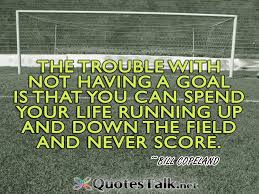
I suppose goals in sport are easy. As long as we know how to play the game, we’re pretty likely to know what they are – whether we’re talking about a literal goal on the pitch or the ultimate goal of winning the game, championship or medal. As a sports coach and a sports team, we are almost always gunning for the same goal, unless there is real disharmony (let’s leave match fixing aside for the time being!) As a coach in sport you must work to bring that rhythm, coherent play and understanding to the team to reach those goals.
In contrast, as leaders in the workplace (and of course in life in general), we’re in the sticky situation of not always having clear goals handed to us on a plate. Or alternatively, we may not always all have the same goals. Do we know the organisation’s goal? If not, then let’s look at things through a more focused lens, what are my goals as a leader of this particular team, what are the team’s goals, what are the individuals’ goals within that team? Do they align? And the more important question perhaps, can I help make them align?
If members of your team have slightly different ambitions or goals in their roles or career, can you accept those and acknowledge them, while still making a compelling case for the team goal? Can you help those same people understand and support you in achieving the team vision?
On the football pitch, as a team member, even if you might disagree with some of the coach’s specific plays, do you still follow the instructions because you believe in the overall objective?
We all know how important it is to have a guiding strategy and goal for our teams, indeed on the grander scale, a vision that we’re all working towards within an organisation. But if you don’t feel you have that from your senior management team, what else can you do for those looking to you?
Well how about we think about what IS in our control, instead of focusing on what we don’t know and can’t always control. What smaller goals can you set within your team for that month, quarter or year?
Would your team know what basket they were shooting at if I came to ask them? How often do you explain the ‘why’ to your teams as well as the ‘what’?
If we feel that we’re losing control and just blindly running up and down the field, whether leading a team or simply leading a life, it is our responsibility to take the time to have another look at that playbook, refocus the tactics and shoot for the goal we want.
 allgamesnorules